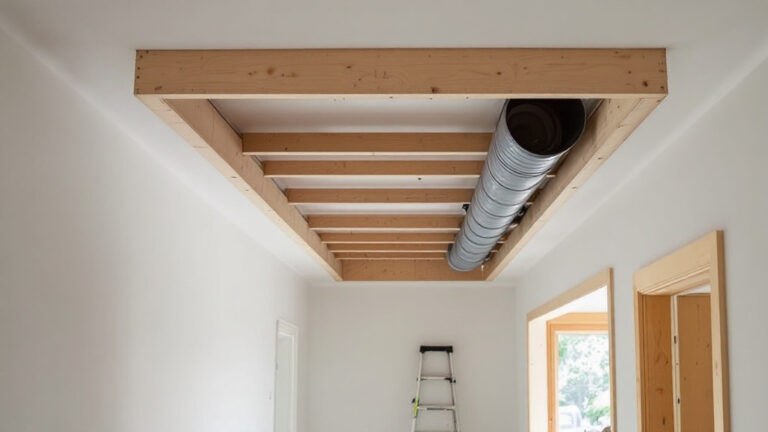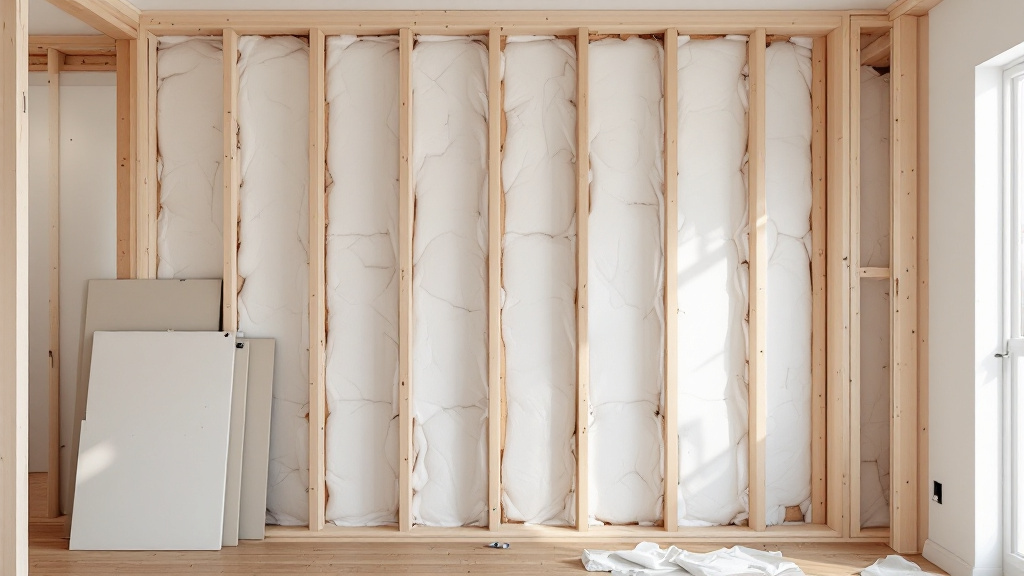
A soundproof wall cuts noise by adding mass, breaking the path the sound travels through the frame, and filling and sealing every gap. In a home that usually means a stud wall with insulation in the cavity and acoustic plasterboard on one or both sides. No wall makes a room silent. A well built one still makes a clear difference to voices and TV noise from the next room.
The right wall depends on what you want quieter. A bedroom, a home office away from the family room and a wall shared with a neighbour each call for something a little different.
Here’s what actually cuts noise, and where the limits are.
How a soundproof wall stops noise
Sound travels through a wall in two ways. It pushes the plasterboard like a drum skin, and it passes through anything solid that connects one side to the other, like the studs. A soundproof wall works on both.
- Mass: Heavier linings are harder for sound to move. Acoustic plasterboard is denser than standard board, and two layers do more than one.
- Insulation in the cavity: Acoustic insulation between the studs soaks up sound that would otherwise bounce around inside the wall.
- Breaking the connection: When each side of the wall is fixed to its own frame, or the lining is fixed on resilient mounts, less sound passes straight through the studs.
- Sealing: Gaps at the floor, the ceiling and around power points let sound straight through. Small gaps matter more than most people expect.
The best results come from using all four together. Upgrading only one, such as swapping to acoustic board on a hollow wall, usually gives a disappointing result.
Acoustic plasterboard and insulation for a soundproof wall
Acoustic plasterboard is the lining most people think of first. It is heavier than standard plasterboard and is designed to reduce the sound passing through. On its own, though, it does far less than people hope.
Fill the cavity of a soundproof wall
An empty stud wall acts a bit like a hollow box, so sound rings around inside it. Filling the cavity with acoustic insulation is one of the most useful parts of the upgrade. On an existing wall this means taking the lining off one side, fitting the insulation, then re-sheeting.
One or two layers of acoustic plasterboard
A second layer of plasterboard, with the joints staggered, adds mass without making the wall much thicker. It suits rooms where you want a real step up but can’t lose floor space to a new frame.
Building a new stud wall for soundproofing
If you’re splitting a room or closing off a space, building the wall with sound in mind from the start is much easier than fixing it later. A new timber or steel stud wall can be framed, insulated and lined in the right order, with gaps sealed as it goes up.
For the quietest result, the wall can be built on two separate frames so the studs on one side don’t touch the lining on the other. That takes more floor space, so it suits a home office or a media room more than a narrow hallway. Our carpentry page covers the stud walls and partitions we frame, plaster and paint.
Soundproofing a wall between you and a neighbour
Walls between attached homes, like townhouses and duplexes, are covered by the National Construction Code. The NCC Housing Provisions require a separating wall between Class 1 buildings to have an airborne sound rating (Rw + Ctr) of not less than 50 (ABCB, NCC 2022 Housing Provisions Part 10.7 Sound insulation). That rule is for walls between dwellings, not walls between rooms inside your own house.
If the noise is coming through a shared wall, adding to your side can help. A new lining on its own frame, with insulation behind it, is the usual way. Changes that touch the separating wall itself, such as fixings into it or new openings, are best checked against the building’s original design before anyone starts.
Choosing a soundproof wall for each room
What the wall needs depends on the noise and the room. A few common situations:
A soundproof wall for a bedroom
If you’re trying to sleep through the TV in the next room, voices are the main problem. Insulation in the cavity and acoustic plasterboard on the noisy side usually make a clear difference. A solid door matters just as much here.
A soundproof wall for a home office
If you work from home and take calls, you want noise kept out and your voice kept in. A new stud wall built with insulation, two layers of board and a sealed door suits this well.
A soundproof wall for a media room
If you want a home theatre, bass is the hard part. This is where a double frame and extra mass earn their keep.
Rw ratings for a soundproof wall explained
You’ll see wall systems sold with an Rw number. Rw is a sound reduction rating, and a higher number means less noise gets through. The Ctr part adjusts the rating for low sounds like bass and traffic rumble, which are the hardest to block.
That’s why a wall can work well for voices and still let the bass from a subwoofer through. If your problem is music, a home theatre or road noise, the low end is what you need to plan for. Mass and a broken connection between the two sides help most with those sounds.
Where a soundproof wall won’t fix the noise
Sound takes the easiest path. If it can get around the wall, upgrading the wall itself won’t solve it. These are the usual weak spots:
- Doors: A hollow door with a gap under it lets more sound through than the wall beside it. A solid door with seals makes a real difference.
- The ceiling space: If the wall stops at the ceiling, noise can travel over the top through the roof space.
- Floors: Timber floors can carry footsteps and noise between rooms.
- Power points and switches: Back to back power points are a direct hole through the wall.
- Windows: Noise from the street comes in through glass far more than through walls.
It pays to find where the noise really gets in before building a wall that only fixes part of it (otherwise you can end up paying for the work twice).
What changes the cost of a soundproof wall
Every soundproofing quote depends on what you’re trying to block and the wall you’re starting with. These are the things that move it:
- New wall or existing wall: Upgrading a wall means taking a lining off and putting it back.
- Size of the wall: Length and ceiling height set how much board and insulation goes in.
- Number of layers: One layer of acoustic board against two.
- Separate frames: A double frame takes more timber or steel and more floor space.
- Doors and openings: A solid door, seals or a new doorway add to the scope.
- Finish and paint: Whether the new wall is set, sanded, sealed and painted to match the room.
A free quote is the simplest way to find out what your room needs. Contact us and tell us what the noise is, where it comes from and which room you want quieter. We’ll explain the options that suit that room.
Plastering Central. Call 0459 664 951. NSW Licence 393197C (All Paintworx Pty Ltd).