Fire rated plasterboard is needed where the building code calls for a wall or ceiling to hold back fire for a set time. In a house, that usually means walls between attached homes like townhouses and duplexes, some walls close to a boundary, and the floor and walls between a garage and a dwelling built above it. Most walls inside a single house don’t need it.
The board alone doesn’t make a wall fire rated. The rating belongs to the whole system: the frame, the number of layers, the fixings, the joints and the sealing.
Here’s where fire rated plasterboard is used and what to check before work starts.
What fire rated plasterboard is
Fire rated plasterboard looks a lot like standard plasterboard from the front. The difference is in the core. It has glass fibres and other additives mixed through the gypsum, so the board holds together for longer when it’s exposed to heat and flame. Standard board cracks and falls away sooner.
That extra time is the point. A fire rated wall or ceiling is designed to slow fire spreading from one space to another, giving people more time to get out.
How a fire rated plasterboard wall gets its rating
In Australia, fire resistance is described with a Fire Resistance Level, or FRL. It’s written as three numbers, such as 60/60/60. The numbers are minutes, and they cover structural adequacy, integrity and insulation.
The FRL comes from a tested system, not from one sheet of board. The same fire rated plasterboard can be part of a 60 minute wall or a 90 minute wall depending on the frame, the number of layers and the way it’s fixed and sealed. That’s why fire rated walls are built to the manufacturer’s tested system, with the specified screws, spacings and sealant. A small change, like leaving out a layer or using the wrong sealant at the top of the wall, can mean the wall no longer meets its rating.
Where the NCC calls for fire rated plasterboard in houses
For houses, the rules sit in the National Construction Code (NCC) Housing Provisions. NSW homes are built under NCC 2022 and its NSW variations. These are the three main places the code asks for fire separation in and around a house.
Fire rated plasterboard in walls between attached homes
If you live in a townhouse, duplex or terrace, the wall between your home and your neighbour’s is a separating wall. The NCC requires a separating wall between Class 1 buildings to have an FRL of not less than 60/60/60, or to be masonry at least 90 mm thick (ABCB, NCC 2022 Housing Provisions Part 9.3 Fire protection of separating walls and floors). Where it’s a lightweight wall, fire rated plasterboard is part of how that rating is reached.
The same clause covers a wall between a house and a garage that isn’t associated with that house, such as a neighbour’s garage built against your home.
Fire rated plasterboard on walls near the boundary
An external wall less than 900 mm from a side or rear boundary generally has to be fire resisting. The Housing Provisions set an FRL of not less than 60/60/60 when tested from the outside, or masonry or masonry veneer at least 90 mm thick (ABCB, NCC 2022 Housing Provisions Part 9.2 Fire separation of external walls). The same part also covers garages and other Class 10a buildings that sit close to a boundary or to another building on the block.
Fire rated plasterboard in garage top dwellings
A garage top dwelling is a home built above a garage that belongs to someone else, which is common in some townhouse layouts. NSW has its own version of this part of the code. It requires a garage top dwelling to be separated from a non-associated private garage by a floor that meets the NSW requirements (ABCB, NCC 2022 Housing Provisions NSW Part 9.4 Fire protection of garage top dwellings). Fire rated plasterboard ceilings are one of the ways that separation is built.
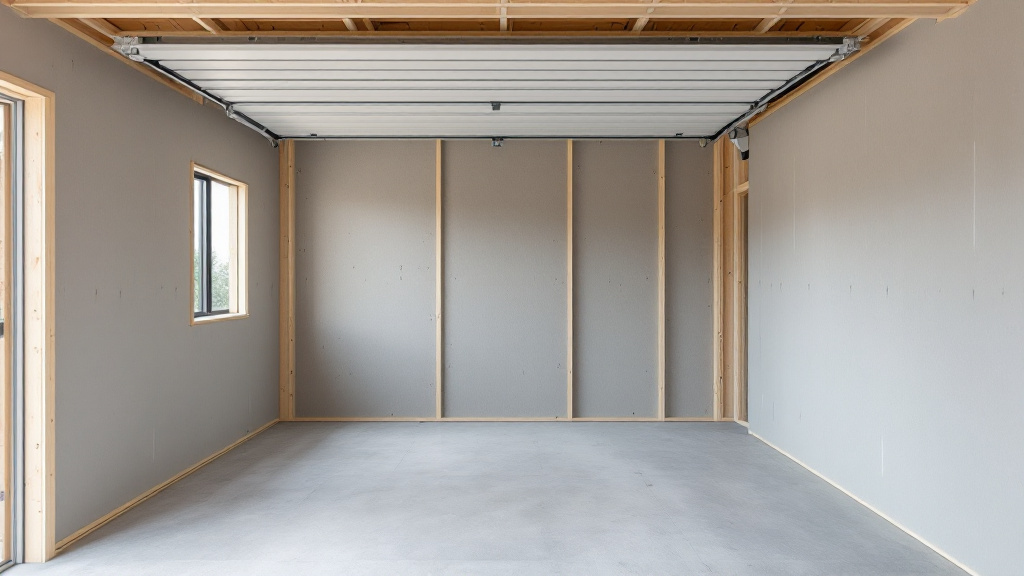
Fire rated plasterboard in your own garage
If the garage is part of your own house and only serves your home, the separating wall clause above doesn’t apply to it, because that clause is about garages that aren’t associated with the dwelling. So the wall between your own garage and your kitchen or laundry usually doesn’t need to be fire rated under that clause.
There are exceptions. If the garage is close to a boundary or to another building, the external wall rules can apply. Your plans or your certifier will show whether any garage wall or ceiling has a fire rating. You can still choose fire rated plasterboard for a garage if you want it; that clause just doesn’t require it.
Fire rated plasterboard in units and apartments
Apartment buildings are Class 2 buildings and fall under NCC Volume One, not the Housing Provisions. The walls and ceilings between units, and between units and common areas, are designed as part of the whole building’s fire safety.
If you own a unit and want to renovate, check with your strata committee before touching any wall or ceiling between your unit and the next. Cutting in a downlight, adding a vent or making a new opening in a fire rated ceiling can break its rating. That includes small changes like a new downlight, an exhaust fan or a data point, not only big openings. Penetrations through a fire rated wall or ceiling need to be sealed with a tested system to keep that rating.
Repairs to fire rated plasterboard walls
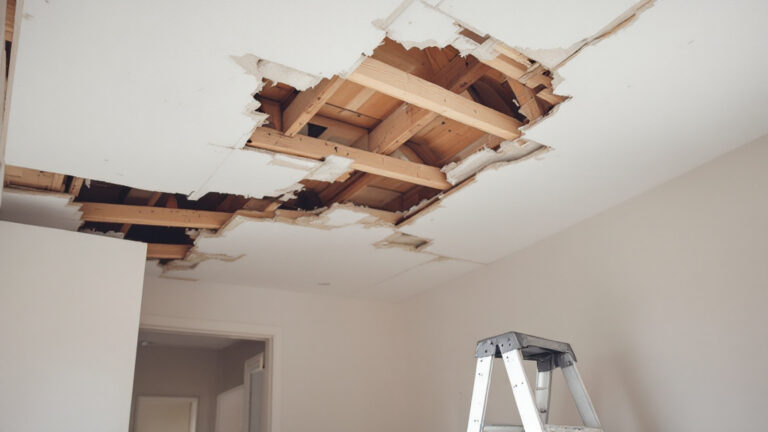
A hole in a fire rated wall or ceiling isn’t a normal patch. To keep the rating, the repair has to use fire rated plasterboard of the right type and thickness, fixed and set the way the tested system requires. A quick patch with standard board and filler might look fine but won’t hold back fire the same way.
If you’re not sure whether a wall is fire rated, these are good signs it might be:
- It’s the wall shared with a neighbour in a townhouse or duplex.
- It’s an external wall very close to the boundary.
- It’s the ceiling of a garage with a separate home above it.
- The plans or the strata records list it as a fire rated wall.
Before booking a repair on one of these walls, try to find out what system it was built with. The original plans, the builder’s documents or the strata records may name it. Matching that system is what keeps the rating, so it’s worth having that information ready when you ask for a quote.
Our residential plastering page covers the walls, ceilings and repairs we do in Central Coast homes.
What changes the cost of fire rated plasterboard work
Fire rated work takes more care than standard plastering, and the scope varies a lot. These are the main things that move the price:
- New wall or repair: Building a new rated wall against patching a section of an existing one.
- The rating needed: A higher rating can mean more layers or a different system.
- Size and height: How much wall or ceiling area is involved.
- Penetrations: Pipes, cables and downlights that need sealing with a tested system.
- Access: Garages full of storage or ceilings above stairwells take longer.
- Finish and paint: Whether the area is set, sanded and painted to match.
A free quote is the simplest way to find out what’s involved. Contact us with what the wall or ceiling is, where it is in the house and any plans or strata notes you have. We’ll explain the options for that wall and what the work includes.
Plastering Central. Call 0459 664 951. NSW Licence 393197C (All Paintworx Pty Ltd).