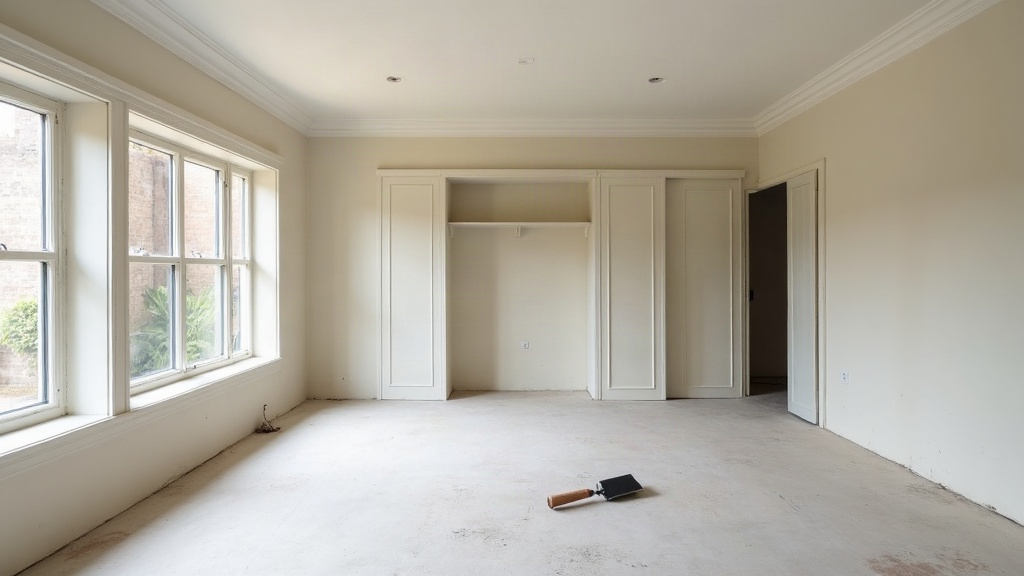
How much does plastering cost? The answer depends on the room, the walls and what’s already there. A small patch on a sound wall and a full ceiling replacement in an older Central Coast home are two very different pieces of work.
Rather than throw a number at you that won’t match your house, this guide walks through what moves the price. Once you know the drivers, a quote makes a lot more sense, and it’s easier to compare two of them side by side.
Here’s what goes into it.
How much does plastering cost for walls compared with ceilings?
Ceilings generally take more effort than walls of the same size. The board is heavier to lift overhead, it has to be fixed to the ceiling joists or battens properly, and setting and sanding above your head is slower work. Cornices add another step where the ceiling meets the wall.
Walls are quicker to hang and finish, but they come with their own extras: power points, light switches, window reveals and corners. Every one of those is a cut and a joint that needs finishing.
Room size and plastering cost
More square metres means more board, more compound and more hours. But a bigger room isn’t always slower per square metre. A long straight wall goes up faster than a small room full of corners, doorways and nooks. Hallways, stairwells and robes often take longer than their size suggests.
How much does plastering cost for repairs versus new work?
Repairs and new plastering are priced in different ways.
- Small repairs: Holes, cracks and dents are mostly about time and setup. The patch itself may be small, but it still needs filling, setting, sanding and often a second coat.
- Larger repairs: Water damaged or sagging sections need the damaged board cut out, new board fitted and the joins blended so the repair doesn’t show.
- New plasterboard: Walls and ceilings in new homes, extensions or renovations are mainly about area, board type and finish level.
There’s a point where patching costs more than it’s worth. If a ceiling has several failing areas, replacing it can be the better spend. You can see the range of plastering and ceiling work we take on at our Central Coast plasterers page.
Older homes and plastering cost
Older homes bring surprises. Uneven walls, old cornices, lath and plaster, or ceilings that have been patched many times all take more care to match or replace.
There’s also asbestos to think about. SafeWork NSW says asbestos materials are still common in homes built before 1990, and you can’t tell just by looking. Only testing a sample confirms it (SafeWork NSW, asbestos fact sheet). Wall and ceiling panels, textured paint and old plaster patching compounds are all on their list of places it turns up. If testing is needed before old sheets come down, that adds time and cost before the plastering starts.
How the plasterboard type changes the plastering cost
Standard plasterboard suits most living areas and bedrooms. Some rooms need something else, and specialty boards cost more to buy and can take longer to fit.
- Moisture resistant board: Used in wet areas such as bathrooms and laundries.
- Fire rated board: Used where a wall or ceiling needs a fire rating.
- Acoustic board: Heavier board for media rooms, bedrooms and walls between units, used to cut down noise.
- Impact resistant board: Tougher board for hallways and high traffic spots.
The right board depends on the room and what the wall needs to do. A quote should list the board type, so you’re comparing like with like.
How much does plastering cost for cornices, bulkheads and details?
The extras around the flat board add up quickly. They’re often where two quotes for the same room differ the most.
- Cornices: A plain cove cornice is quick to fit. Ornate or decorative cornices take longer, and matching an old profile in a renovation takes longer again.
- Bulkheads: Building a bulkhead over cabinetry or around ducting means framing, board and extra corners to finish.
- Square set ceilings: Leaving out the cornice for a square set or shadow line look needs more careful setting where the wall meets the ceiling.
- Openings: Every new doorway, window reveal or archway adds cuts, corner bead and finishing.
If you’re not sure what you want, ask for the quote to show the main option and the alternative. That way you can see what the detail adds before you decide.
How the finish level affects plastering cost
The level of finish is one of the biggest drivers that people don’t know to ask about. AS/NZS 2589, the Australian and New Zealand standard for installing and finishing plasterboard, sets out several levels of finish.
Level 4 and level 5 plaster finish
Level 4 is the usual finish for most homes. Joints, screws and corners are set and sanded so they disappear once the wall is painted under normal light.
Level 5 adds a skim coat over the whole surface. It’s used where light hits the wall at a low angle, such as long hallways, big windows and down lights close to the wall, or where a gloss paint will show every flaw. It takes more compound and more time, so it costs more. It’s worth asking about before a wall goes up, because changing the finish later means going over the wall again.
Access, preparation and timing also change plastering cost
The work around the plastering matters too.
- Access: High or raked ceilings, stairwells and two storey homes need scaffolding or platforms.
- Protection: Furniture, floors and fittings need covering, and occupied homes take more care than empty ones.
- Removal: Taking down old board or ceilings and taking it away adds labour and disposal.
- Drying time: Plaster compound needs to dry between coats, so the work is spread over several visits.
- Painting: If the new plaster needs sealing and painting, having the same team do both saves waiting for a second trade.
Getting an accurate plastering quote
The most accurate price comes from seeing the walls or ceiling in person. To help, take a few photos, note the rough room sizes, and say whether the house is older. Ask for the board type, the finish level and what preparation is included to be written on the quote.
In NSW, it’s worth checking the licence of anyone you hire on the NSW Fair Trading licence check.
Why the cheapest plastering quote isn’t always the cheapest
A low price can make sense. It can also mean something has been left out. Before you pick a quote, check what each one includes.
- Preparation: Is removal of old board, cleaning up and covering your furniture included, or extra?
- Board and finish: Does the quote name the board type and the level of finish?
- Cornices and corners: Are they priced in, or left for later?
- Sealing and painting: Will the new plaster be left raw, sealed, or painted?
Plaster that has to be redone because the joins show through the paint costs more in the end. A written quote that lists these things makes it easy to see what you’re paying for.
Get a free quote for plastering on the Central Coast
What will your plastering cost? Tell us what you need done and where, and we’ll arrange a free, no obligation quote that spells out the board, the finish and what’s included. Contact us to book a free quote anywhere on the Central Coast.
Plastering Central. Call 0459 664 951. NSW Licence 393197C (All Paintworx Pty Ltd).